⚡PROJECT PIXEL's: Elemental Systems⚡
⚡ THE FOUNDATION OF TACTICAL COMBAT ⚡
In Project Pixel, every attack carries an elemental type. Physical strikes, Thermal burns, Cryo freezes-each element has strengths, weaknesses, and interactions with others. Elementals aren't just damage numbers; they're a tactical language that shapes how you approach every fight.
Two Core Concepts:
1. MOVE TYPE - The element of the attack you use (Thermal Kick, Cryo Blast, etc.)
2. ENEMY TYPE - The elemental affiliation of the enemy itself
1. MOVE TYPE - The element of the attack you use (Thermal Kick, Cryo Blast, etc.)
2. ENEMY TYPE - The elemental affiliation of the enemy itself
When you use an elemental move, the target gets an Active Status corresponding to that element. Thermal moves apply Burn. Cryo moves apply Freeze. These statuses create tactical opportunities and restrictions.
⚡ VISUAL EXAMPLES ⚡
🎬 ELEMENTALS IN ACTION
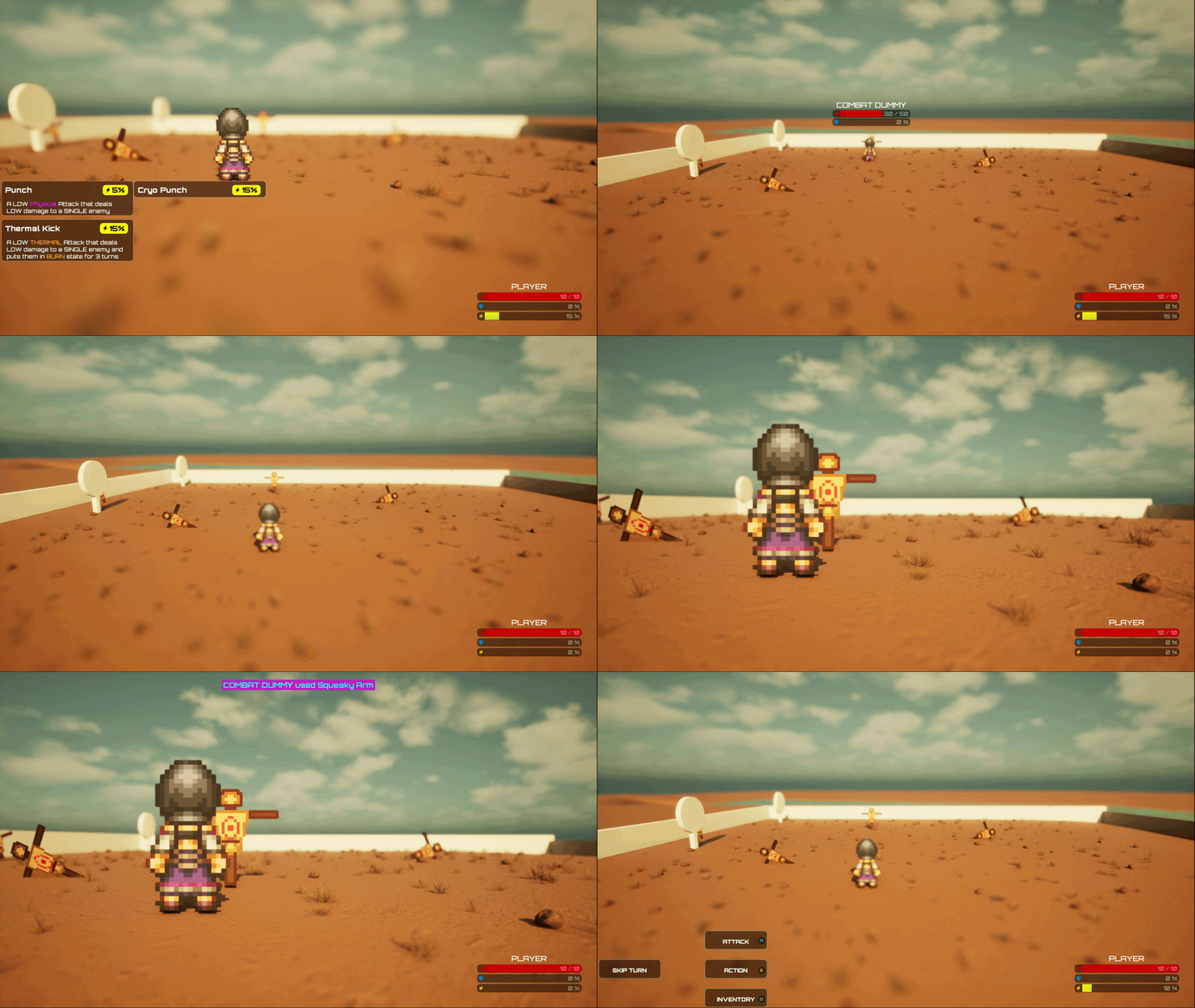
Thermal Attack
Using Thermal Kick applies Burn status. Enemy takes damage over time next turn.
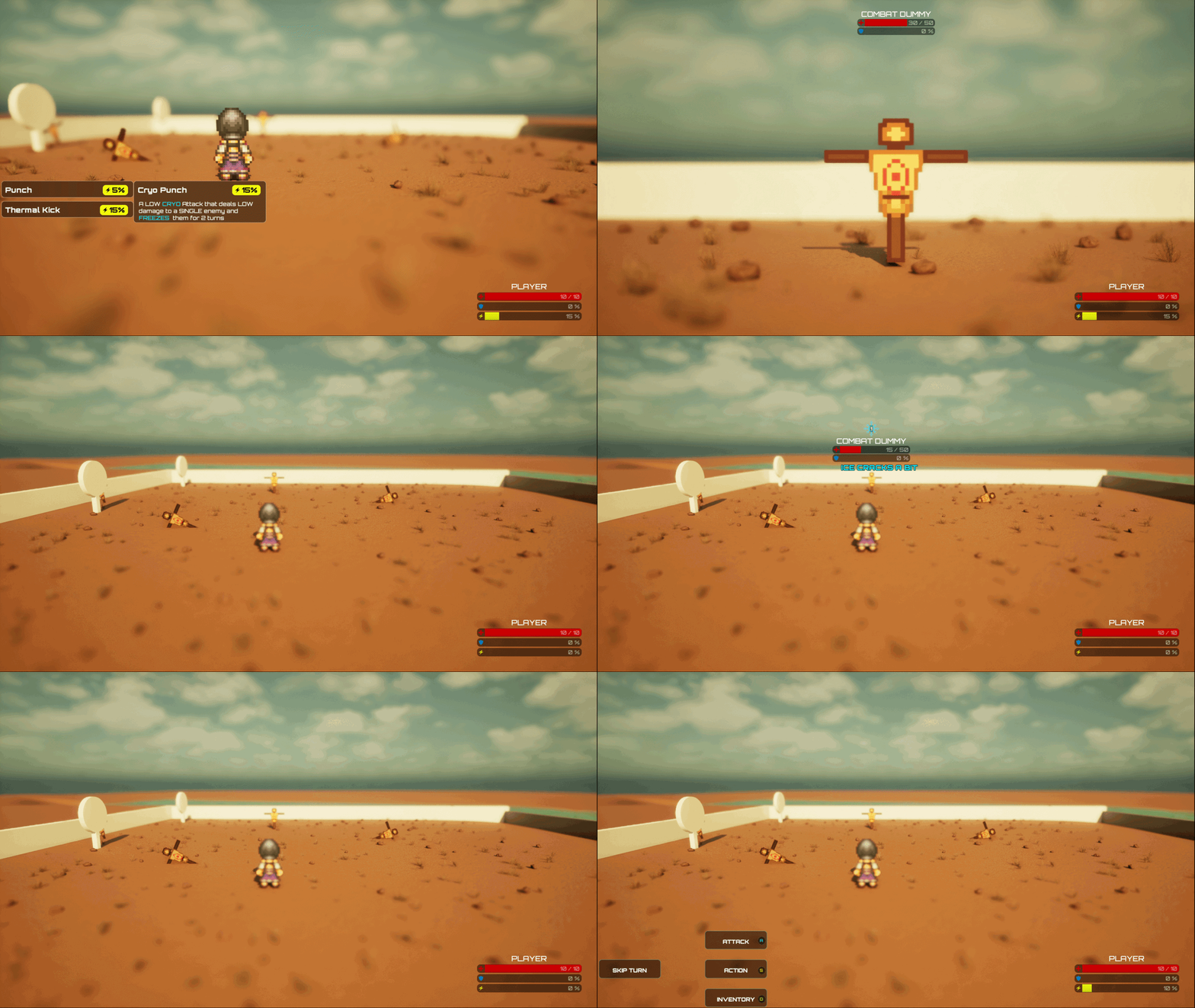
Cryo Attack
Using Cryo Blast applies Freeze status. Enemy skips their next turn.
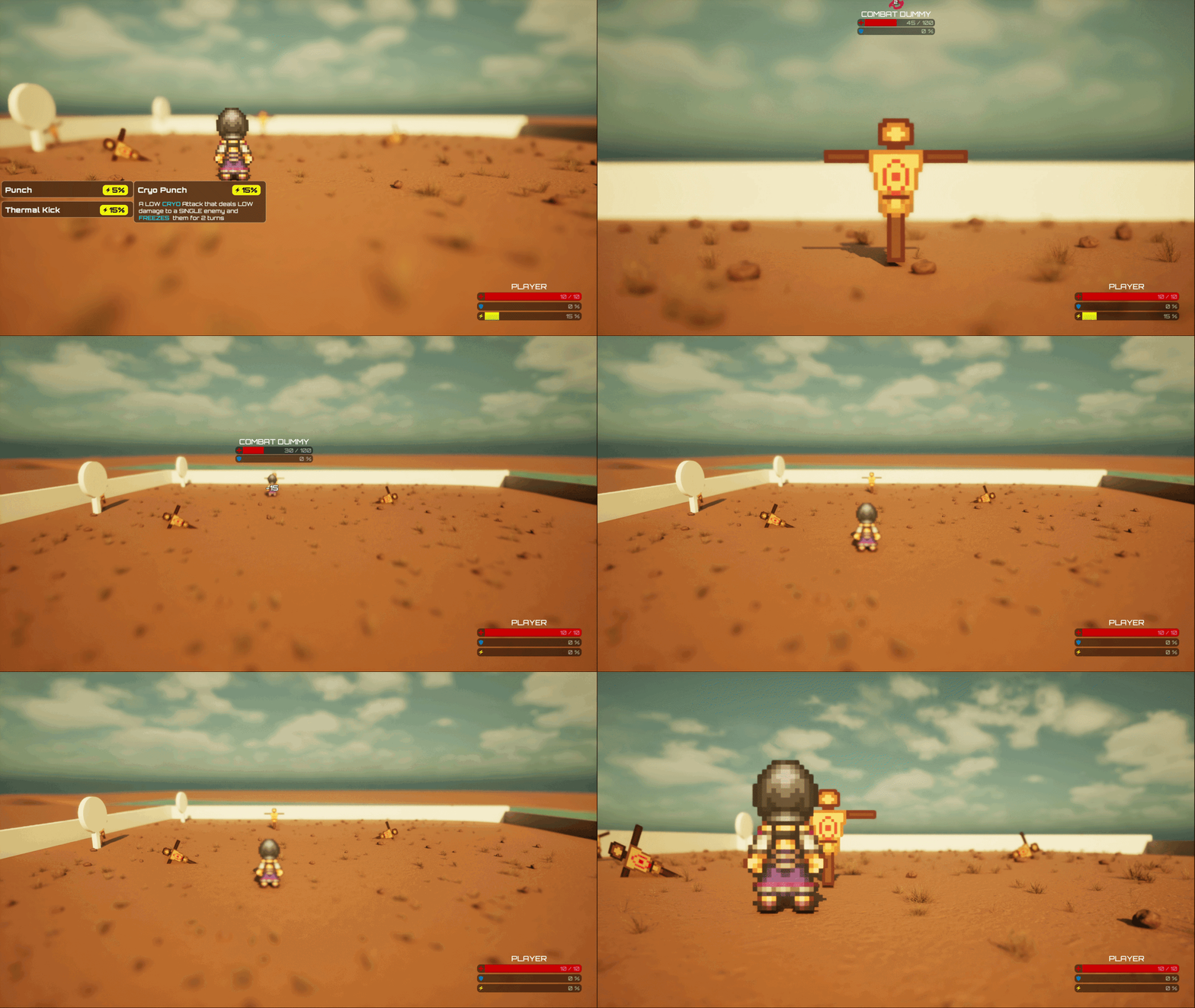
Status Cancellation
Freeze cancels Thermal. No elemental applied, but status is removed.
⚡ CORE MECHANIC ⚡
🔄 STATUS INTERACTION RULES
Rule 1: Using Elemental Move Applies Status
Use Thermal Kick → Enemy gets Burn status
Use Cryo Blast → Enemy gets Freeze status
These statuses persist and affect enemy behavior next turn.
Use Cryo Blast → Enemy gets Freeze status
These statuses persist and affect enemy behavior next turn.
Rule 2: Opposite Elements Cancel Out
If enemy has Freeze status and you use Thermal attack → Thermal cancels Freeze
Important: No damage is applied when canceling. The damage is completely negated in exchange for removing the opposing status.
Important: No damage is applied when canceling. The damage is completely negated in exchange for removing the opposing status.
Rule 3: Same-Type Matchups Follow the Table
If enemy has NO active status, damage follows the Elemental Interaction Table.
Thermal attack on Cryo enemy = 0.5x damage (not very effective)
Photon attack on Void enemy = 2x damage (super effective)
Thermal attack on Cryo enemy = 0.5x damage (not very effective)
Photon attack on Void enemy = 2x damage (super effective)
⚡ EXAMPLE COMBAT FLOW ⚡
📖 HOW STATUS INTERACTIONS PLAY OUT
Turn 1: Player Uses Thermal Kick on Cryo Enemy
The Cryo enemy has no active status. You use Thermal Kick (Move Type: Thermal). According to the table, Thermal vs Cryo = 0.5x damage. Enemy takes reduced damage and gets Burn status.
Turn 2: Enemy Has Burn Status, You Use Cryo Blast
Enemy has active Burn status. You use Cryo Blast (Move Type: Cryo). Cryo cancels Burn-no damage is applied. The Burn status is removed, and the enemy avoids the Cryo attack's damage entirely.
Turn 3: No Status Remains, You Use Physical Punch
Enemy has no active status now. You use Physical Punch. No special interactions-damage follows normal Physical vs Cryo matchup from the table (Physical vs Cryo = 1x, neutral).
⚡ THE NINE ELEMENTS ⚡
🌍 ELEMENTAL TYPES & PROPERTIES
Every attack in Project Pixel falls into one of nine elemental categories. Each has unique properties, strengths against certain enemies, and weaknesses against others. Understanding all nine is key to mastering combat.
Physical (PHY)
The most fundamental attack type. Punches, kicks, and melee strikes fall into this category. No special status effects-pure, straightforward damage.
Status Effect: None (no active status applied)
Thermal (THR) 🔥
Fire and heat-based attacks. Applies Burn status, causing damage over time and affecting enemy behavior. Thermal attacks are powerful against organic and cold-natured enemies.
Status Effect: Burn (applies per-turn damage, cancels Cryo)
Cryo (CRY) ❄️
Ice and cold-based attacks. Applies Freeze status, immobilizing the enemy and reducing their damage output. Cryo is Thermal's opposite-using it cancels Burn status.
Status Effect: Freeze (enemy skips turn, takes reduced damage, cancels Thermal)
Photon (PHT) 💡
Light and radiation-based attacks. Pure energy in its most direct form. Photon is particularly effective against Void entities and shadows.
Status Effect: Illuminate (reveals hidden info, cancels Shadow)
Void (VOD) 🌑
Absence and darkness. Attacks that consume energy and negate. Void is Photon's opposite-they cancel each other out. Void is devastating against light-aligned enemies.
Status Effect: Shadow (reduces outgoing damage, cancels Photon)
Static (STC) ⚡
Electrical and magnetic attacks. Disrupts enemy coordination and control. Static builds up tension and can chain between targets.
Status Effect: Stun (reduces accuracy, can chain, cancels Kinetic)
Kinetic (KNT) 💨
Motion and momentum-based attacks. High-speed strikes that create openings. Kinetic is Static's opposite and is effective against stationary, heavy enemies.
Status Effect: Momentum (increases next action speed, cancels Static)
Biological (BIO) 🧬
Life force and organic attacks. Poison, disease, and corruption. Highly effective against living creatures but less so against synthetic or inorganic enemies.
Status Effect: Poison (persistent damage each turn, cancels Synthetic)
Synthetic (SYN) 🤖
Technology and artificial power. Programming, viruses, hacking. Synthetic is Biological's opposite and is devastating to mechanical or digital enemies.
Status Effect: Corruption (disrupts enemy systems, cancels Biological)
⚡ ELEMENTAL PAIRS ⚡
🔗 OPPOSITE ELEMENTS THAT CANCEL
Four pairs of opposite elements cancel each other's active status:
Thermal ↔ Cryo (Fire ↔ Ice)
Heat and cold are natural opposites. Thermal cancels Freeze. Cryo cancels Burn.
Photon ↔ Void (Light ↔ Shadow)
Light dispels darkness. Photon cancels Shadow. Void cancels Illuminate.
Static ↔ Kinetic (Electricity ↔ Motion)
Movement disrupts electricity. Static cancels Momentum. Kinetic cancels Stun.
Biological ↔ Synthetic (Life ↔ Technology)
Organic and artificial are fundamentally opposed. Bio cancels Corruption. Synthetic cancels Poison.
⚡ ELEMENTAL INTERACTION TABLE ⚡
📊 MOVE TYPE vs ENEMY TYPE DAMAGE
This table shows damage multipliers when your Move Type (vertical axis) hits an enemy of a specific Enemy Type (horizontal axis). Use this to plan your attacks:
2x = Super Effective (high damage)
1x = Neutral (normal damage)
0.5x = Not Effective (reduced damage)
| DEFENSE → ATTACK ↓ |
PHY | THR | CRY | PHT | VOD | STC | KNT | BIO | SYN |
|---|---|---|---|---|---|---|---|---|---|
| PHY | 1 | 1 | 1 | 1 | 1 | 1 | 1 | 2 | 0.5 |
| THR | 1 | 0.5 | 2 | 1 | 1 | 1 | 1 | 2 | 0.5 |
| CRY | 1 | 2 | 0.5 | 1 | 1 | 1 | 1 | 0.5 | 2 |
| PHT | 1 | 1 | 1 | 0.5 | 2 | 1 | 1 | 1 | 2 |
| VOD | 1 | 1 | 1 | 0.5 | 0.5 | 2 | 2 | 1 | 1 |
| STC | 1 | 1 | 1 | 1 | 0.5 | 0.5 | 1 | 2 | 2 |
| KNT | 2 | 1 | 1 | 1 | 0.5 | 1 | 0.5 | 1 | 2 |
| BIO | 0.5 | 0.5 | 2 | 1 | 1 | 0.5 | 1 | 0.5 | 1 |
| SYN | 2 | 2 | 0.5 | 0.5 | 1 | 0.5 | 1 | 1 | 0.5 |
How to Read: Find your Move Type on the left (vertical), trace right to the Enemy Type column. The value shown is your damage multiplier. For example: Thermal move on Cryo enemy = 2x damage (super effective). Thermal move on Thermal enemy = 0.5x (not effective).
⚡ MATCHUP FLOWCHART ⚡
🔄 HOW TO DETERMINE EFFECTIVENESS
⚡ STATUS EFFECT TIMELINE ⚡
📊 WHEN STATUSES APPLY & RESOLVE
⚡ STATUS EFFECTS IN DEPTH ⚡
🎯 ACTIVE STATUSES & HOW THEY WORK
When you use an elemental move, the target gains an Active Status. These statuses persist, affecting the target's next actions and creating tactical windows.
Burn (From Thermal)
The enemy is on fire. Takes damage each turn. Affects their combat effectiveness and creates urgency. Canceled by Cryo attacks-if hit with a Cryo move, Burn is removed and no damage is applied.
Freeze (From Cryo)
The enemy is frozen solid. Skips their next turn and takes reduced damage while frozen. A powerful crowd-control effect. Canceled by Thermal attacks-if hit with Thermal, Freeze is removed and no damage is applied.
Illuminate (From Photon)
Light reveals what was hidden. Reveals enemy stats, abilities, and strategies. Canceled by Void attacks which shroud everything in darkness.
Shadow (From Void)
The enemy is cloaked in darkness. Reduces their outgoing damage and accuracy. Canceled by Photon attacks which pierce the shadows.
Stun (From Static)
Electrical shock disrupts the enemy's nervous system. Reduces their accuracy and action effectiveness. Can chain between targets. Canceled by Kinetic momentum which breaks the static hold.
Momentum (From Kinetic)
Pure motion and speed. Increases the enemy's next action speed and damage. Aggressive but short-lived. Canceled by Static which grounds the momentum.
Poison (From Biological)
Toxin spreads through the enemy's body. Takes damage each turn, persists longer than Burn. Highly effective against living creatures. Canceled by Synthetic corruption overwriting the biological poison.
Corruption (From Synthetic)
Code and data degradation. Enemy systems malfunction, reducing their effectiveness. Particularly devastating to synthetic enemies. Canceled by Biological organisms which purge the corruption.
⚡ STRATEGIC ELEMENTAL COMBAT ⚡
🎮 HOW TO MASTER THE SYSTEM
Understanding elementals isn't just about knowing the table. It's about making tactical decisions: do you stack status effects, cancel your opponent's advantages, or exploit type matchups? Every elemental choice shapes your combat flow.
Strategy 1: Exploit Type Matchups
Identify the enemy type and use moves that are super effective (2x damage). A Cryo enemy takes 2x damage from Thermal-always a priority target. Stack super-effective moves for explosive damage bursts.
Strategy 2: Control With Status Effects
Use statuses to restrict enemy actions. Freeze skips turns. Burn deals ongoing damage. Poison persists. These aren't just damage-they're crowd control. Stack them before a boss fight to lock down threats.
Strategy 3: Status Cancellation Trade-offs
When an enemy gets a harmful status, you can cancel it with an opposite element-but you deal zero damage. Decide: is removing their advantage worth sacrificing a turn's damage? Sometimes yes, sometimes no.
Strategy 4: Build Elemental Synergy
Some elements combo better than others. Thermal+Cryo creates dynamic cancellation. Biological+Synthetic create a natural opposition. Learn combinations that synergize with your playstyle.
Strategy 5: Multi-Enemy Elemental Chaos
Facing multiple enemies means juggling multiple elemental matchups. Do you focus on one strong matchup, or spread status effects across all threats? Positioning and targeting become elemental puzzles.
📖 REAL SCENARIOS
Scenario: Fighting a Thermal Enemy
The enemy is fire-aligned (Thermal type). Cryo attacks deal 2x damage-always your priority. If you use Thermal attack on them (0.5x), they take reduced damage AND get Burn status. Should you still do it? Only if you're stack-building or buying time.
Scenario: Enemy Has Freeze Status
You froze the enemy last turn. They skip this turn. But you could use Thermal to cancel Freeze, removing their disadvantage but dealing zero damage. If there are other threats, canceling might not be worth it. Let them stay frozen and focus elsewhere.
Scenario: Building Toward a Finisher
Enemy is a Void type. Photon is super effective (2x). But if you're low on charge, you might use Physical first (1x neutral), then Photon next turn when you have more charge for a bigger hit. Or use Photon now and accept the smaller damage. Strategic resource management.
⚡ DESIGN LEARNINGS ⚡
💡 KEY INSIGHTS FROM BUILDING ELEMENTAL SYSTEMS
Learning 1: 9 Elements Provides Depth Without Overwhelming
Nine feels like the sweet spot. Enough variety for interesting matchups and combos. Not so many that players get lost. Five elements would be too simple. Fifteen would be chaos. Nine creates a rich tactical space.
Learning 2: Opposite Pairs Create Narrative Harmony
Four pairs of opposites (Thermal↔Cryo, Photon↔Void, Static↔Kinetic, Bio↔Synthetic) feel natural and memorable. They tell stories: fire vs ice, light vs dark, electricity vs momentum, life vs technology. Players remember these intuitively.
Learning 3: Status Cancellation > Damage on Status
Early design had opposite elements still deal damage when canceling. It was too forgiving. Making cancellation deal zero damage creates tactical tension: "Do I remove their advantage or stay aggressive?" This is where depth emerges.
Learning 4: Asymmetrical Matchups Create Mastery
Not every element beats every other in the same pattern. Some matchups are 2x, others 1x, others 0.5x in non-obvious ways. This asymmetry rewards player learning and prevents "optimal" play from being obvious. Expertise emerges from pattern recognition.
Learning 5: Move Type ≠ Character Type Separation Matters
Having both Move Type (attack element) and Enemy Type (affiliation element) allows players to use cross-element strategies. A Thermal character can still use Cryo moves. This flexibility creates build diversity and prevents rigid rock-paper-scissors gameplay.
Learning 6: Active Status Forces Turn-by-Turn Decisions
Status effects persist across turns. This creates a planning layer: "The enemy will have Burn next turn. Do I cancel it or let it ride?" Every turn becomes a mini-chess match between status management and damage output.
Learning 7: The Table is Readable, Not Memorizable
Players shouldn't memorize 81 matchups. But with four opposite pairs and logical patterns (e.g., Kinetic is high-damage physical), the table feels navigable. Good design makes players feel smart when they deduce the system, not dumb for not memorizing.